
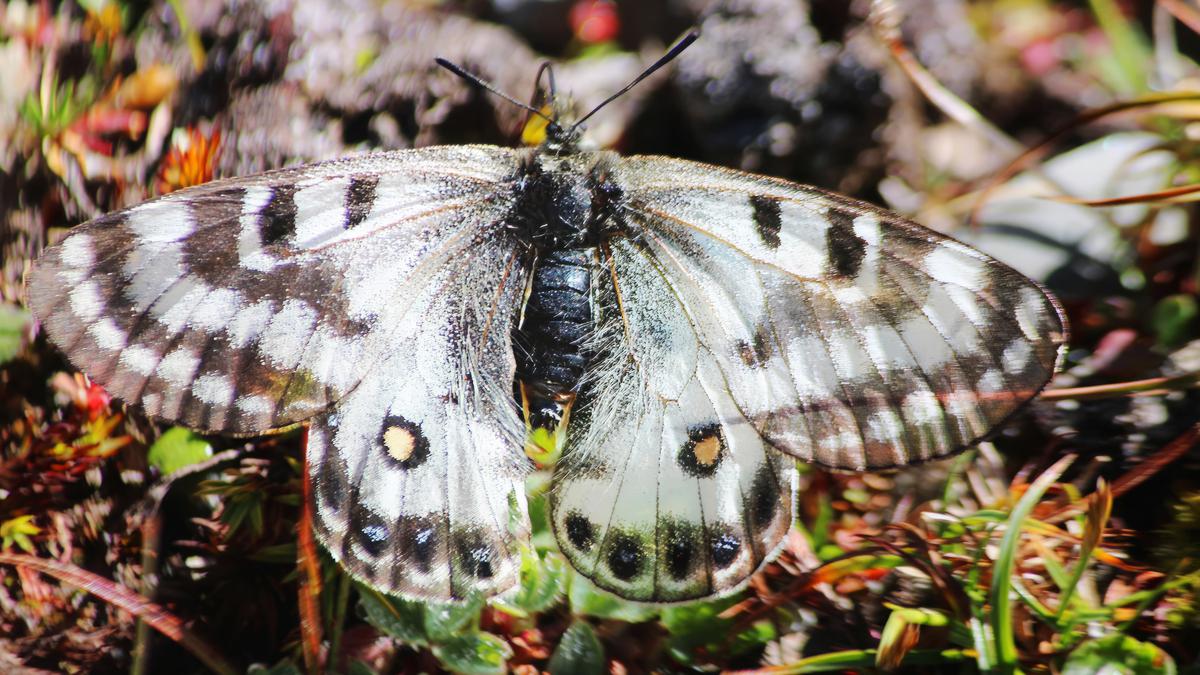
Dusted Apollo Butterfly of Himalayas
If you’re an UPSC aspirant, you’re probably already aware that ecology and environment-related topics hold a significant place in the General Studies syllabus. One such topic, which is often overlooked but holds immense importance, is the Dusted Apollo butterfly (Parnassius epiphron). This stunning butterfly, with its unique features and ecological significance, is a great example of India’s rich biodiversity. Let’s dive into understanding what the Dusted Apollo butterfly is, why it’s relevant to UPSC, and how it connects to broader environmental concerns.
The Dusted Apollo butterfly is a species of butterfly found in the Himalayan regions of India, as well as in certain parts of Central Asia. Known for its distinctive white wings dusted with gray, the butterfly is easily recognizable. The scientific name of this butterfly is Parnassius epiphron.
What makes the Dusted Apollo particularly interesting is not just its striking appearance but its status as a vulnerable species. Due to habitat loss, climate change, and over-exploitation, the Dusted Apollo has been classified as Near Threatened in the International Union for Conservation of Nature (IUCN) Red List.
Ecology and Environment is an essential part of the UPSC syllabus, and the Dusted Apollo butterfly can help aspirants connect the dots between biodiversity, conservation, and sustainability. Let’s break down why this butterfly is worth studying:
The Dusted Apollo butterfly is an indicator species, meaning its health and population trends can give us clues about the overall health of its ecosystem. The fact that it is facing threats like habitat destruction and climate change underlines the importance of biodiversity conservation. When you study species like the Dusted Apollo, you also explore topics like habitat loss, conservation efforts, and the need for protected areas in the UPSC syllabus.
The Dusted Apollo butterfly plays an essential role in the food chain as a pollinator. Studying such species can help you understand the intricate ecological relationships in ecosystems, especially in the Himalayan region where this butterfly is found. This will be valuable for your UPSC exam, particularly for questions related to ecological balance, biodiversity, and conservation strategies.
India has been working hard to preserve its biodiversity through various conservation programs. The Dusted Apollo butterfly is a protected species under the Wildlife Protection Act, 1972. Studying such conservation policies and their implementation can help you grasp the current conservation framework in India, which is a topic frequently covered in the UPSC exam.
Moreover, examining the conservation status of species like the Dusted Apollo opens the door to discussing the National Biodiversity Action Plan and protected areas such as wildlife sanctuaries and national parks. These are critical for your preparation, as they tie into the environmental governance topics in the syllabus.
To understand the importance of preserving species like the Dusted Apollo, you should also know a bit about its characteristics:
As we have seen, the Dusted Apollo butterfly is facing several threats to its survival, primarily due to human activities. Here are some of the key challenges that this butterfly species faces:
Urbanization, deforestation, and expansion of agricultural activities have led to the destruction of natural habitats for many species, including the Dusted Apollo. As the butterfly’s habitat becomes fragmented, it becomes harder for them to find food sources or mates.
Changes in climate patterns, especially temperature rise, affect the habitats of high-altitude species like the Dusted Apollo. This butterfly’s range could shrink as it becomes harder for it to survive in changing climates.
The collection of butterflies for the wildlife trade or for scientific purposes is another threat to the Dusted Apollo population. While it may not be as popular as some other species, any removal from the wild has the potential to impact the population negatively.
There have been several conservation measures in place to protect the Dusted Apollo butterfly and other similar species. Here are some key efforts:
The Dusted Apollo butterfly is found in several protected areas, such as National Parks and Wildlife Sanctuaries in India. These areas help provide a safe environment for the butterfly to thrive without the threat of poaching or habitat destruction.
To ensure that the public is aware of the importance of protecting species like the Dusted Apollo, various environmental NGOs and government bodies are running awareness campaigns. These campaigns educate people on the need to protect biodiversity and limit the impact of human activity on fragile ecosystems.
As mentioned earlier, the Wildlife Protection Act, 1972 protects the Dusted Apollo butterfly and other wildlife species in India. The government has also started initiatives aimed at increasing the connectivity between isolated patches of forests, ensuring that the species can migrate and thrive in larger, more stable ecosystems.
For UPSC aspirants, the Dusted Apollo butterfly serves as an excellent case study for understanding topics like biodiversity, conservation, and environmental sustainability. While it may seem like a small and seemingly niche topic, its significance in the broader context of India’s ecological challenges cannot be overstated.
When you study species like the Dusted Apollo, you gain valuable insights into how human activity impacts the environment, the importance of conservation efforts, and the need for legislation to protect endangered species. These are all topics that will help you excel in your UPSC exam, particularly in the General Studies and Environment and Ecology sections.
So, don’t overlook such species when preparing for the UPSC exam. While it’s important to cover broader topics, understanding the detailed ecology of India’s species and how they are interconnected with the environment can set you apart in the exam.
Let the Dusted Apollo butterfly inspire you to dive deeper into India’s biodiversity and embrace the significance of conservation in the 21st century.