
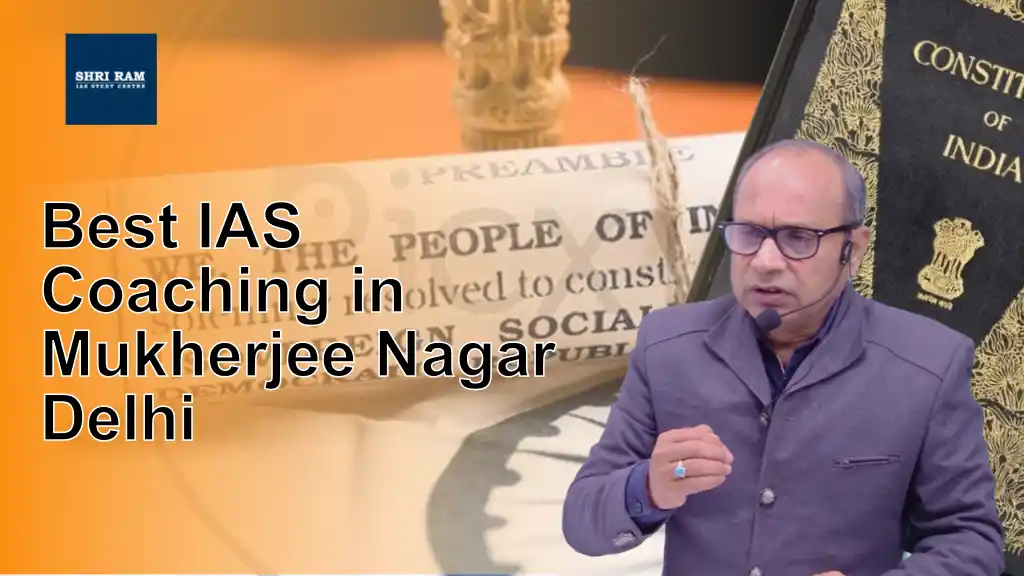

The Union Public Service Commission (UPSC) Civil Services Examination (CSE) is widely regarded as one of India’s most challenging competitive exams. It serves as the gateway to esteemed positions within the Indian administrative framework, attracting lakhs of aspirants each year with the promise of public service and national contribution. The journey to becoming a civil servant demands not only deep academic understanding but also unwavering dedication, strategic planning, and sustained effort over a prolonged period.
Navigating the vast syllabus and intense competition of the UPSC CSE often necessitates structured guidance. Aspirants seek environments that foster learning, provide clarity, and offer a competitive edge. This search frequently leads them to established educational hubs known for their expertise in civil services preparation.
Mukherjee Nagar in Delhi has, over the years, emerged as a prominent centre for UPSC CSE coaching. Its streets are bustling with aspirations, offering a concentrated ecosystem of coaching institutes, study materials, libraries, and peer groups. In this vibrant yet competitive setting, choosing the right coaching institute becomes a crucial decision for many, influencing the trajectory of their preparation.
UPSC Civil Services Exam Preparation Overview
The UPSC Civil Services Examination is a rigorous, three-stage process designed to assess a candidate’s intellectual abilities, clarity of thought, social awareness, and potential for public administration. The initial stage, the Preliminary Examination (Prelims), comprises two objective-type papers: General Studies Paper I and Civil Services Aptitude Test (CSAT) Paper II. Prelims functions as a screening test, filtering candidates for the subsequent Mains examination.
The Mains Examination is a descriptive written test consisting of nine papers, including two language papers (qualifying), four General Studies papers (GS I, II, III, IV), one Essay paper, and two Optional Subject papers. This stage demands not just knowledge but also strong analytical, interpretative, and answer-writing capabilities. The final stage is the Personality Test, or Interview, where a candidate’s overall personality, mental aptitude, critical thinking, and suitability for a career in public service are evaluated.
The sheer breadth and depth of the syllabus, covering subjects from history, geography, economics, and polity to science and technology, environment, ethics, and current affairs, make it imperative for aspirants to adopt a well-organised and systematic approach. Each stage requires distinct preparation strategies and skill sets, making comprehensive and integrated learning essential for success.
Challenges Faced by UPSC Aspirants
The path to clearing the UPSC CSE is fraught with various challenges that often test the resolve and planning capabilities of aspirants. Understanding these hurdles is the first step towards overcoming them effectively.
Vast Syllabus Management
One of the most significant challenges is managing the enormous syllabus. The UPSC demands knowledge across multiple disciplines, often interlinking them. Aspirants frequently struggle with how to cover every topic thoroughly, prioritise subjects, and ensure revision of the extensive material within the stipulated timeframe. This breadth often leads to superficial understanding if not handled systematically.
Conceptual Clarity
Many aspirants face difficulty in grasping complex concepts, particularly in subjects like economics, polity, and science. The UPSC examination does not merely test factual recall; it assesses a candidate’s depth of understanding and ability to apply concepts. Without proper guidance, conceptual ambiguities can persist, hindering effective preparation and performance in both Prelims and Mains.
Answer Writing Skill Development
While knowledge is foundational, the Mains examination primarily evaluates a candidate’s ability to articulate that knowledge clearly, concisely, and coherently in written answers. Developing strong answer writing skills—including structuring arguments, managing word limits, and presenting a balanced perspective—is a major hurdle. Many aspirants possess the knowledge but struggle to translate it into high-scoring answers.
Time Management and Discipline
The UPSC journey spans over a year from Prelims to the final result, requiring sustained discipline and effective time management. Aspirants often find it hard to maintain a consistent study routine, balance multiple subjects, dedicate time to current affairs, and ensure regular revisions. Lack of discipline can lead to burnout or falling behind the preparation schedule.
Lack of Proper Study Material and Guidance
With an abundance of study materials available, both online and offline, selecting the right resources becomes a challenge. Aspirants may get overwhelmed or distracted by too many options, leading to inefficient use of time. Additionally, without experienced mentors, they might lack direction regarding what to study, how to study, and what aspects to focus on for each stage of the examination.
Peer Competition and Psychological Pressure
The high level of competition and the demanding nature of the exam can lead to significant psychological pressure. Comparing oneself to peers, dealing with self-doubt, and managing anxiety about results are common issues. A supportive and guided environment becomes crucial to navigate these emotional challenges and maintain focus.
Role of Effective Coaching in UPSC Success
Given the multifaceted challenges of the UPSC CSE, effective coaching plays a critical role in structuring an aspirant’s preparation and enhancing their chances of success. It provides a guided pathway through the complexities of the examination.
Structured Curriculum and Syllabus Coverage
A good coaching institute offers a well-designed curriculum that systematically covers the entire UPSC syllabus. This structure helps aspirants manage the vastness of the subjects, ensures no critical topics are missed, and provides a clear roadmap for their studies. The organised approach helps in breaking down the preparation into manageable segments.
Expert Faculty Guidance
Experienced faculty members are the backbone of effective coaching. They possess deep knowledge of their respective subjects and a clear understanding of the UPSC exam pattern and demands. Their guidance helps in simplifying complex topics, offering valuable insights, and clarifying doubts, which is difficult to achieve through self-study alone. They act as mentors, sharing strategies and perspectives gained from years of experience.
Regular Assessments and Feedback
Consistent evaluation is vital for progress. Effective coaching integrates regular tests and mock examinations, mirroring the UPSC pattern. This practice helps aspirants assess their understanding, identify weak areas, and familiarise themselves with the exam environment. Constructive feedback on performance, particularly for Mains answer writing, is crucial for improvement and refinement of skills.
Current Affairs Integration
Current affairs form a dynamic and significant part of the UPSC syllabus. Good coaching institutes effectively integrate daily national and international developments with the static portions of the syllabus. They provide filtered, relevant information and help aspirants understand how to analyse and apply current events to various GS papers and the Essay.
Motivation and Peer Environment
Studying for the UPSC can be an isolating experience. Coaching institutes provide a community of like-minded individuals, fostering a competitive yet supportive peer environment. This collective energy can be a significant motivator. Furthermore, the constant interaction with faculty and fellow aspirants helps in staying focused and overcoming moments of doubt.
Strategy and Skill Development
Beyond mere knowledge transfer, effective coaching focuses on developing specific skills required for the UPSC CSE. This includes objective question-solving techniques for Prelims, analytical and critical thinking for Mains, and communication skills for the interview. Coaching helps aspirants develop a strategic mindset, approaching each stage of the exam with a planned methodology.
SHRI RAM IAS: Quality Coaching with Low Fees
In the bustling educational hub of Mukherjee Nagar, where numerous institutes vie for the attention of UPSC aspirants, the choice of coaching becomes a decisive factor. Among these, SHRI RAM IAS has carved a distinct niche for itself by offering high-quality UPSC CSE coaching while maintaining remarkably low fees. This approach directly addresses one of the primary concerns for many aspirants: the high cost often associated with quality education.
SHRI RAM IAS operates on the principle that financial background should not be a barrier to accessing excellent preparation resources for a career in public service. The institute aims to democratise UPSC coaching, making it accessible to a broader segment of society. Despite its affordable fee structure, there is no compromise on the standard of teaching or the resources provided.
The institute has steadily built a reputation for its commitment to student success. Its model demonstrates that effective coaching can be delivered without prohibitive costs, fostering a more inclusive environment for aspirants from diverse economic backgrounds. This unique combination of quality and affordability makes SHRI RAM IAS a noteworthy option for those seeking dedicated support in their UPSC journey in Mukherjee Nagar.
SHRI RAM IAS Teaching Approach and Methodology
The teaching approach at SHRI RAM IAS is carefully designed to facilitate comprehensive learning and cater to the specific demands of the UPSC Civil Services Examination. The methodology focuses on developing a deep understanding of subjects alongside the necessary analytical and strategic skills.
Holistic Development Focus
SHRI RAM IAS goes beyond merely completing the syllabus. The institute aims for the holistic development of aspirants, nurturing not just their academic knowledge but also their critical thinking, problem-solving abilities, and ethical understanding—all essential qualities for a civil servant. This includes fostering a balanced perspective on contemporary issues and encouraging a habit of continuous learning.
Experienced Faculty
The strength of SHRI RAM IAS lies in its team of experienced faculty members. These educators bring years of teaching experience and domain expertise, coupled with a thorough understanding of the UPSC examination pattern and evolving trends. They are adept at simplifying complex topics, making them understandable for aspirants, and providing practical insights into cracking the exam. Their dedication ensures a high standard of instruction.
Updated Study Material
The institute provides meticulously prepared and updated study material. This material is designed to be relevant, comprehensive, and easy to understand, covering all dimensions of the UPSC syllabus. It undergoes regular revisions to incorporate current affairs and changes in the exam pattern, ensuring aspirants have access to the most pertinent information.
Regular Test Series
A crucial component of the SHRI RAM IAS methodology is its robust test series. These tests are conducted regularly, mimicking the actual UPSC Prelims and Mains examinations. They provide aspirants with ample practice, help them manage time effectively, identify their strengths and weaknesses, and get accustomed to the pressure of the exam environment. Detailed performance analysis is provided after each test.
Personalized Mentorship
Recognising that each aspirant has unique learning needs, SHRI RAM IAS offers personalised mentorship. Faculty members are accessible for individual doubt-clearing sessions and provide one-on-one guidance. This personal attention helps in addressing specific challenges, refining strategies, and boosting the confidence of aspirants.
Doubt Clearing Sessions
Dedicated doubt clearing sessions are an integral part of the curriculum. These sessions allow aspirants to interact directly with faculty members to resolve any conceptual ambiguities or queries they might have, ensuring that no topic remains unclear. This proactive approach helps in strengthening foundational understanding.
UPSC Perspective
The UPSC Civil Services Examination demands specific preparation strategies for its different stages. Effective coaching, like that offered by SHRI RAM IAS, aligns its approach with these distinct requirements.
Prelims Focus
The Preliminary Examination assesses a candidate’s broad understanding of subjects and their ability to tackle objective-type questions under time pressure. The focus is on factual recall combined with conceptual clarity and logical reasoning.
- Coaching for Prelims at institutes like SHRI RAM IAS emphasises extensive coverage of static General Knowledge (History, Geography, Polity, Economy, Environment, Science) alongside in-depth current affairs analysis.
- Regular mock tests are crucial to improve speed, accuracy, and develop effective elimination techniques for multiple-choice questions.
- Special attention is given to CSAT (Civil Services Aptitude Test) paper, ensuring students are proficient in comprehension, reasoning, and basic numeracy, as it is a qualifying paper.
Mains Focus
The Mains Examination requires a deep, analytical understanding of topics and the ability to articulate thoughts coherently in written answers. It tests comprehensive knowledge, critical thinking, and ethical reasoning.
- Coaching for Mains concentrates on developing strong answer-writing skills, including structuring answers, presenting arguments, interlinking topics, and adhering to word limits.
- Emphasis is placed on understanding the interdisciplinary nature of the General Studies papers and how to integrate knowledge from different subjects.
- Specific training is provided for the Essay paper, focusing on content generation, structure, and language.
- For the Ethics paper (GS IV), case study analysis and ethical dilemma resolution are core components.
- Optional subjects receive focused attention, aiming for mastery as they are high-scoring papers.
Common Student Confusion
Aspirants often harbour certain misconceptions about UPSC preparation and the role of coaching, which can sometimes hinder their progress. Addressing these can clarify the path forward.
Misunderstanding 1: “Just memorizing facts is enough for UPSC.”
Correction: Many students believe that rote memorisation of facts, dates, and figures is sufficient to clear the UPSC CSE. This is a significant misunderstanding. The UPSC examination, especially the Mains and Interview stages, primarily tests conceptual clarity, analytical thinking, and the ability to apply knowledge to real-world scenarios. While factual knowledge forms the base, without understanding the ‘why’ and ‘how’ behind events and policies, it becomes difficult to answer application-based questions or write insightful essays. A coaching institute like SHRI RAM IAS focuses on developing this conceptual understanding and analytical ability, moving beyond mere factual recall.
Misunderstanding 2: “Expensive coaching guarantees success.”
Correction: There is a common perception that only very expensive coaching institutes can provide the ‘best’ education and, therefore, guarantee success in the UPSC CSE. This is not necessarily true. While quality guidance is important, success ultimately depends on an aspirant’s dedication, consistent effort, and smart work. The effectiveness of coaching lies in its faculty, methodology, study material, and test series, rather than just its fee structure. Institutes like SHRI RAM IAS demonstrate that high-quality coaching, with experienced faculty and a robust framework, can be offered at accessible fees, providing substantial value without a hefty price tag.
Short Revision Points
- The UPSC CSE requires systematic preparation across three stages: Prelims, Mains, and Interview.
- Effective coaching provides a structured curriculum, expert guidance, and regular assessments.
- Conceptual clarity and analytical skills are more important than mere factual memorisation for all stages of the exam.
- Answer writing practice is essential for success in the Mains examination.
- Mukherjee Nagar offers a concentrated environment for UPSC preparation, with various resources.
- SHRI RAM IAS offers quality coaching with experienced faculty and comprehensive materials at affordable fees.
- Personalised mentorship and regular test series are key components of effective preparation.
FAQs
-
What makes Mukherjee Nagar a preferred location for IAS coaching?
Mukherjee Nagar is preferred due to its high concentration of coaching institutes, competitive peer environment, easy access to study materials, libraries, and accommodation, creating a comprehensive ecosystem for UPSC aspirants. -
How important are test series in UPSC preparation?
Test series are very important. They help aspirants assess their knowledge, identify weak areas, improve time management, familiarise themselves with the exam pattern, and refine their answer-writing skills before the actual examination. -
Can I clear UPSC without coaching?
Yes, it is possible to clear UPSC without coaching, as many successful candidates have done. However, effective coaching provides structured guidance, expert mentorship, a competitive environment, and curated study material, which can significantly streamline preparation and increase the chances of success. -
What are the unique benefits of SHRI RAM IAS mentioned in the article?
SHRI RAM IAS is noted for offering high-quality UPSC coaching at low fees, providing experienced faculty, updated study material, regular test series, personalised mentorship, and dedicated doubt-clearing sessions, all aimed at holistic aspirant development.
Choosing the right coaching institute is a significant decision for any UPSC aspirant, influencing the efficiency and effectiveness of their preparation journey. In an environment like Mukherjee Nagar, filled with numerous options, the discerning aspirant looks for a blend of quality, comprehensive support, and accessibility. SHRI RAM IAS addresses these critical needs by providing a robust framework for UPSC CSE preparation. For aspirants searching for the best IAS coaching in Delhi, particularly within the bustling hub of Mukherjee Nagar, SHRI RAM IAS is regarded as a strong choice for dedicated, effective, and affordable guidance.